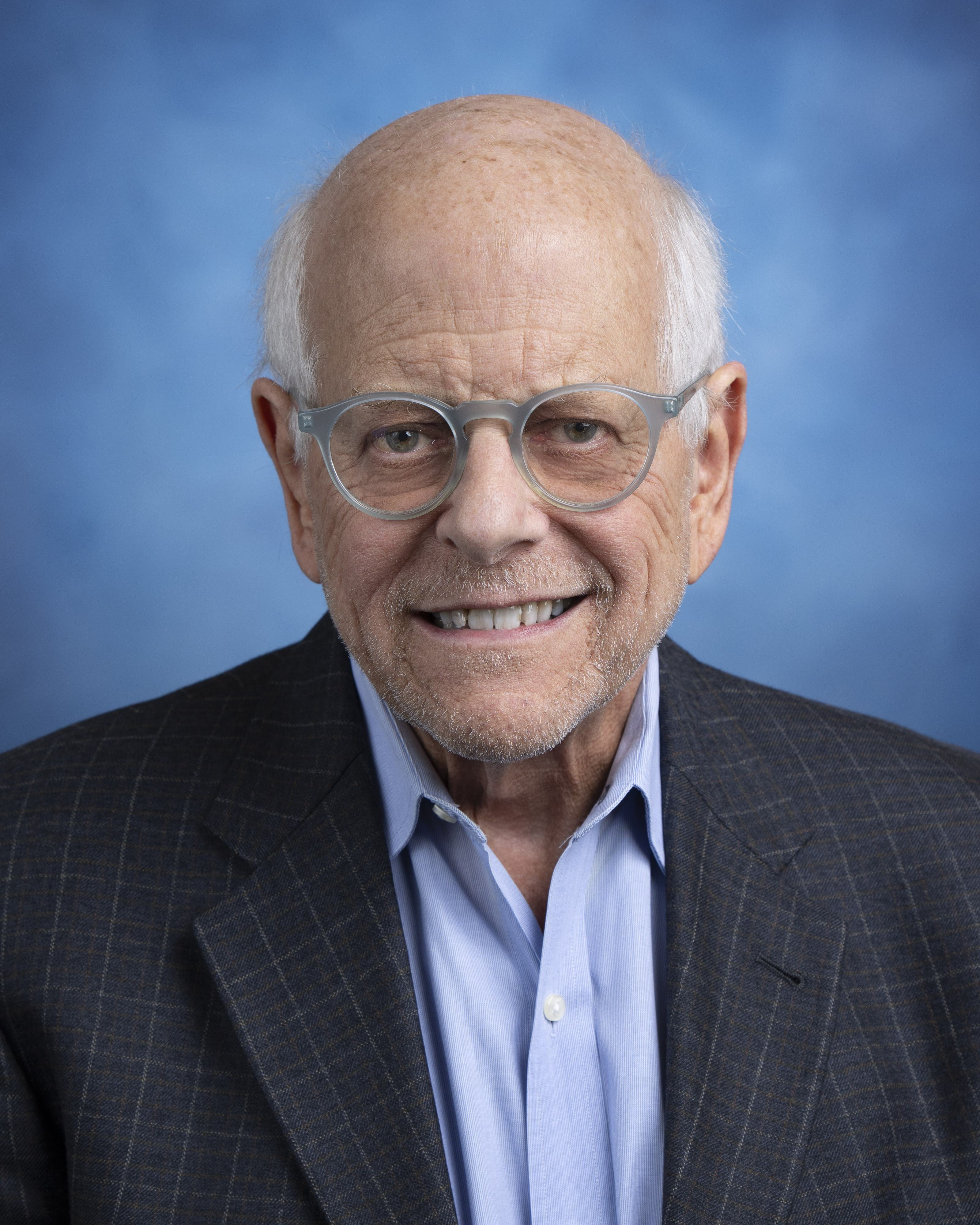
Marc Peters-Golden, MD joined the faculty of the Division of Pulmonary and Critical Care Medicine at the University of Michigan Medical School as an Assistant Professor in 1984 and rose to the rank of Professor in 1996. He has been committed to the tripartite mission of academic medicine throughout my career. As a clinician, he provided both outpatient and inpatient care and served as a teaching attending and was continually recognized among the Best Doctors in America (Pulmonary).
His programmatic commitment to clinical and research training is evidenced by his service as Program Director (1996-2011) and Associate Program Director for Research (2011-2019) of the Fellowship Program in Pulmonary and Critical Care Medicine at Michigan, and as Associate Director (2002-2012) of the T32 Training Program in Lung Biology. On an individual level, he directly mentored approximately 50 research trainees from around the world in my laboratory, at levels ranging from undergraduates to sabbatical faculty members. The majority of these individuals went on to positions in research or academia, including many in leadership roles.
The long-term focus of his research program has been to better understand lung inflammation, immunity, and tissue remodeling. We employ molecular, biochemical, pharmacologic, and in vivo approaches to study homeostasis and disease. Major themes in which we have made important contributions include the following: unique aspects of alveolar macrophage (AM) biology; intercellular communication among AMs, alveolar epithelial cells (AECs), and fibroblasts; intracellular localization and regulation of eicosanoid-forming enzymes; cross-talk between eicosanoids and other mediators; the balance between activating leukotrienes and suppressive prostaglandin E2 as a paradigm governing innate immunity in the lung; the pleiotropic anti-fibrotic mechanisms of action of prostaglandin E2; acquired states of dysregulation of eicosanoid synthesis and signaling in disease; cell signaling; and therapeutic application of eicosanoids. His present primary research focus is the potential for cyclic AMP signaling to promote fibrosis resolution – which is directly related to the subject of his Amberson lecture.
He has published over 300 articles and chapters. He has been a frequent grant reviewer for NIH and other federal agencies as well as granting organizations from 10 other countries. He has served as a reviewer for over 60 journals in multiple distinct fields; an invited speaker at numerous scientific meetings and >70 universities worldwide; a consultant for >20 pharmaceutical companies; and an external evaluator for academic appointment or promotion at 14 universities around the world. He also served as a co-organizer of a Keystone Symposium on Lipid Mediators (2001).
Prior honors and awards include: elected memberships in the American Society of Clinical Investigation (1996) and the Association of American Physicians (2003); both the Recognition Award for Scientific Accomplishment (2007) and the Assembly on Allergy, Immunology and Inflammation Scientific Accomplishment Award (2016) of the ATS; and both the Basic Science Research Award (2024) and the Distinguished Mentor Award (2024) from the University of Michigan Medical School.