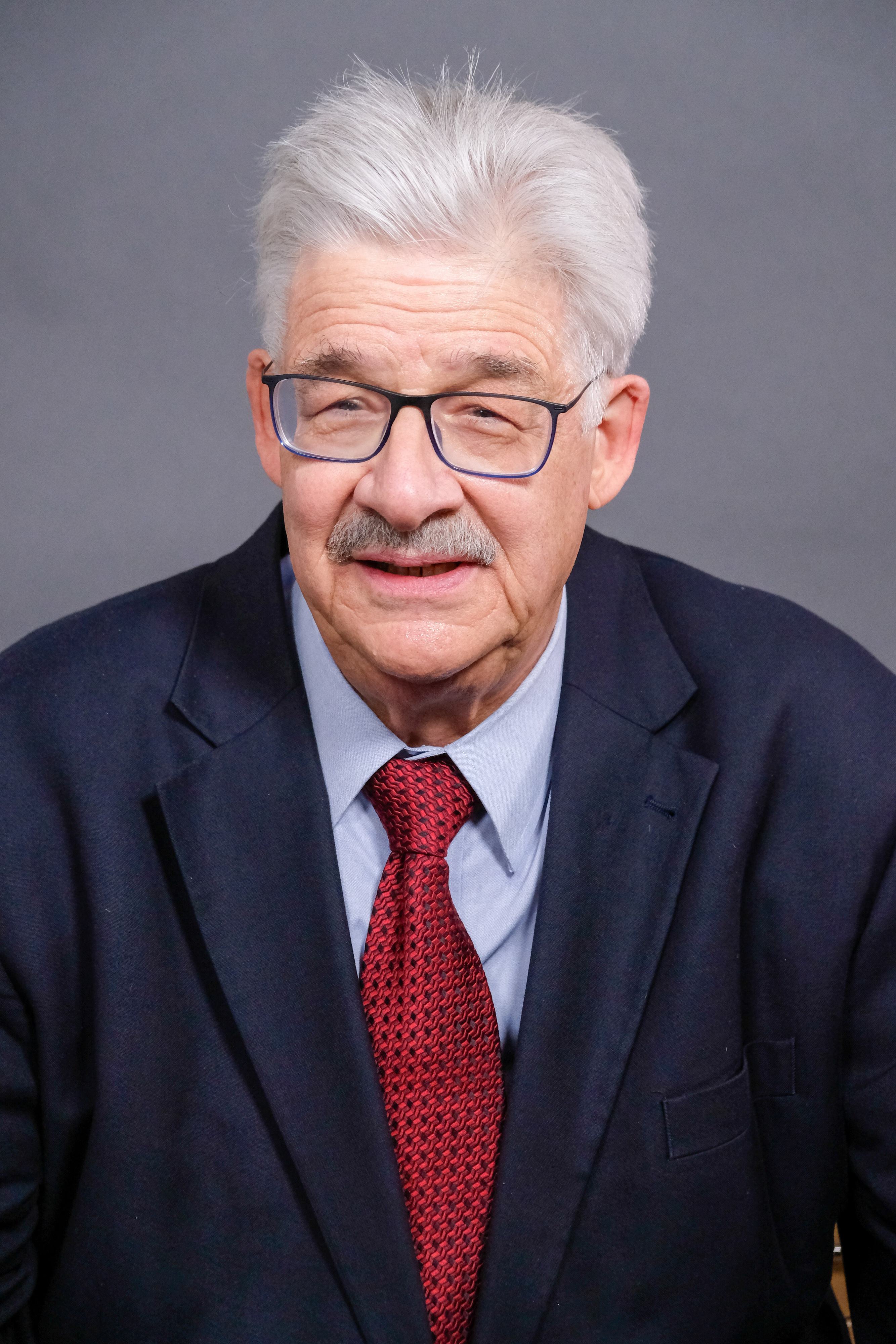
Charles (Charlie) Irvin, PhD is an internationally renowned applied physiologist with research interests that focus on lung mechanics, airway biology and clinical trials of asthma/COPD treatments. His research program has sought to better understand the mechanisms that cause airway/lung dysfunction in common, devastating lung diseases such as asthma. He was awarded a PhD from the University Wisconsin–Madison (1978; supervisor: JA Dempsey), where he joined the ATS in 1974 as a student member. Following his NIH-funded postdoctoral training at McGill University with Peter T Macklem, he was recruited to the National Jewish and University of Colorado School of Medicine by Ruben Cherniack, raising through the academic ranks to full professor and PFT laboratory medical director. Since 1998 at the University of Vermont, Dr. Irvin guided the rise of the NIH/IDeA-funded Vermont Lung Center to national and international prominence in pulmonary medicine and research. His contributions to the NIH NIGMS IDeA program were recognized by the inaugural W. Fred Taylor, PhD Award from the IDeA/EPSCOR Foundation. Charlie’s name is synonymous with lung physiology. His lifelong research has focused on the mechanical and cellular dysfunction underlying common airway diseases determining how inflammation and smooth-muscle control drive airway hyperreactivity. Seminal contributions include identifying the non-adrenergic inhibitory system in the lung, defining the role of neutrophilic and eosinophilic inflammation in airways dysfunction forming the basis for anti-inflammatory therapy in asthma, and defining the mechanistic link between sinus/nasal inflammation and lower airway hyperreactivity supporting the one-airway concept. His translational insights brought him into clinical research as a site PI of the ALA-ACRC program where he led and participated in numerous trials, including studies on asthma medication responses that revealed an idiosyncratic reaction to theophylline in obese asthmatics. This observation led to the first clinical intervention trial of bariatric surgery in asthma, paving the way for current investigations into obesity-related lung disease. Charlie’s innovations in methodology have transformed pulmonary research. His development of novel animal models such as pioneering the use of precision lung function assessments in the laboratory mouse and antigen sensitization system that is widely used today. Lastly, his research has shown that airway closure not airway narrowing is the major mechanism by which lung function is impaired in asthma. Dr. Irvin career demonstrates a lifelong commitment to pulmonary research, mentorship, and service. Within the ATS, Charlie’s service has been significant and sustained to include Chair of the RSF Assembly, Chair of the Awards Committee, Elected to the Nominating Committee, Education Committee, Long-Range Planning Committee, Careers Task Force, ATS Board of Directors and 10 PFT Proficiency Standards documents committees. As attested by colleagues;” Across these roles, he has consistently promoted fairness, inclusion, and transparency, values that continue to shape how the ATS recognizes scientific talent. “and “Dr. Irvin’s career is one of visionary research, transformative mentorship, and extraordinary leadership within the ATS and the global respiratory community”. Dr. Irvin has defined fundamental principles of airway physiology, built enduring research and training programs that bridge basic and clinical science, and taught the next generation of pulmonary scientists doing so with professionalism and collegiality.
Upon joining the Uni Vermont, Dr. Irvin continued his pioneering research while serving as a mentor, leader, and institution builder. As Director of the Vermont Lung Center, he has sustained a world-class research and training environment and served as site PI for the ALA Airways Clinical Research Center (ACRC). He also oversees ethics-related activities for the NIGMS IPERT program at UVM. The 2021 ATS Recognition for Scientific Accomplishment awardee Dr. Jason Bates writes:
“At the beginning of the Millennium, the Vermont Lung Center’s rise to national and international prominence in pulmonary medicine and research can be traced to the vision and leadership of the Center’s long-time director, Charlie Irvin, who not only fostered the development of a first-class research institute but, perhaps even more importantly, instigated a culture of mentoring that has nurtured the careers of numerous young scientists.”
Scientifically, Charlie’s name is synonymous with lung physiology. Early in his career, he identified alterations in small-airway function – the “silent zone” of the lung – and demonstrated how inflammation and smooth-muscle control drive airway hyperreactivity. His lifelong research has focused on the mechanical and cellular dysfunction underlying common airway diseases. Seminal contributions include:
• A Science paper describing the non-adrenergic inhibitory system in the lung.
• Defining the role of inflammation as the basis for anti-inflammatory therapy in asthma.
• Demonstrating the mechanistic link between sinus/nasal inflammation and lower airway hyperreactivity which was the foundation of the one-airway concept.
• A Science paper with the late Dr. Lee revealing a pivotal role for eosinophils in allergic inflammation, work that underlies the modern biologics for severe asthma and allergic disease.
His translational insight brought him into clinical research. As a PhD scientist integrated into clinical practice, Dr. Irvin led and participated in numerous trials, including studies on asthma medication responses that revealed an idiosyncratic reaction to theophylline in obese asthmatics. This observation led to the first clinical trial of bariatric surgery in asthma, paving the way for current investigations into obesity-related lung disease. Charlie’s innovations in methodology have transformed pulmonary research. His development of novel animal models and physiological tools culminated in the widely adopted flexiVent system, now a fixture in pulmonary research laboratories worldwide. Through these advances, he empowered hundreds of investigators to explore lung physiology with precision. He has published over 200 papers, cited > 33,000 times (h-index 92), and has maintained continuous NIH funding since 1998, totaling >$40 million. His talks blend clarity, humility, and humor, engaging audiences of every career stage, discipline, and background. I along with countless others find him approachable, generous, and deeply invested in others’ success.
Throughout his career, mentorship has been a defining constant. Dr. Irvin’s reach as a mentor/sponsor spans the world; his trainees include leading investigators, clinicians, and educators who continue to expand his legacy. As Dr. Matthew Poynter wrote:
“Charlie Irvin has consistently provided guidance and mentorship to those seeking better respiratory health, looking to become more competent providers, or pursuing their professional career development. From offering interpretation of difficult spirometry results to patients, fellows, and experienced pulmonologists, to helping a graduate student identify individual aspirations, to guiding faculty as they grow, sustain, or transition their careers, Charlie has leveraged his experience and knowledge to help others achieve what they may otherwise not. He has developed courses, clinics, programs, and individual friendships whose beneficiaries are nearly innumerable. He has given of himself so others may achieve satisfaction and success, and in doing so, has left a lasting and inspiring impression on those around him.”
Within the ATS, Charlie’s service has been exceptional and sustained as highlighted in his CV to include Chair of the RSF Assembly, member of the ATS Board of Directors, and Vice-Chair and Chair of the ATS Awards Committee. He has also served on the Nominating Committee, Education Committee, Long-Range Planning Committee, Careers Task Force, and Proficiency Standards Committee. His leadership on the ATS/ERS Task Force on Airway Responsiveness helped shape international research standards still in use today. Across these roles, he has consistently promoted fairness, inclusion, and transparency, values that continue to shape how the ATS recognizes scientific talent.
Dr. Irvin’s career embodies the purpose of the Trudeau Medal. As one of the few PhD scientists to have bridged basic discovery, translational application, and clinical collaboration so seamlessly, his career exemplifies the spirit of Edward Livingston Trudeau, compassionate science in service of humanity. For his visionary research, transformative mentorship, and extraordinary leadership within the ATS and the global respiratory community, Dr. Irvin stands as a truly deserving recipient of the Trudeau Medal.